Sparkle and noise
Strobe
Stars that flash on and off several times a second: a twinkling burst.
4–6"calibers in the library
127–193 mburst height
118–178 mvisible spread (diameter)
4–5 svisible for
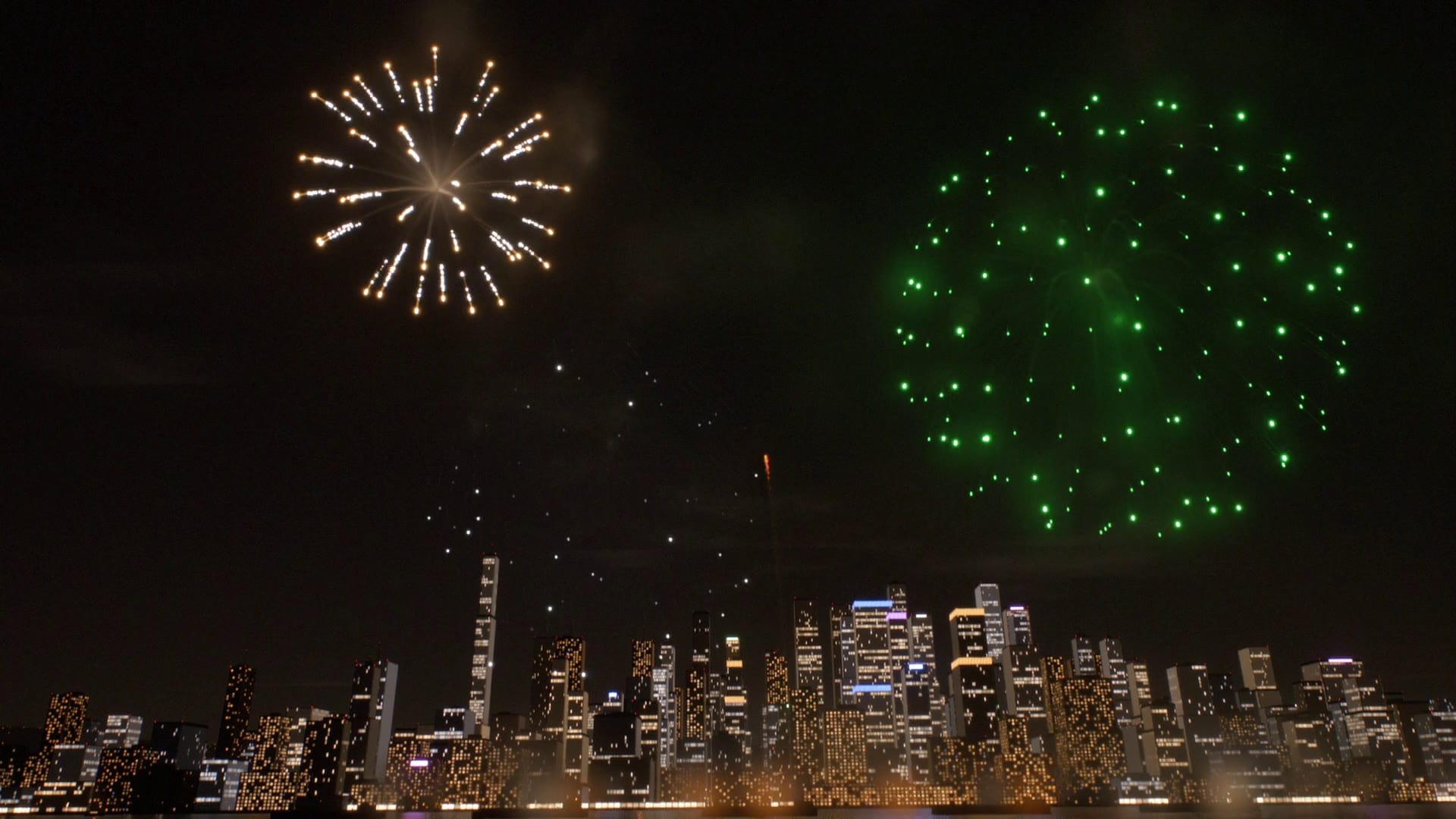
Strobe stars blink: they flash on and off a few times a second, so the burst twinkles instead of glowing steadily. White strobes are the most common, green and red exist too.
How it works
Strobe compositions burn in an oscillating way: a dark smouldering phase followed by a bright flash, repeating at roughly 1.5 to 10 times per second, typically around five.
How to recognise it
- A burst that twinkles rather than glows.
- Often used in the core of a pistil or as a hanging cloud of flashes.
How designers use it
- Strobes keep the sky alive after the main break: good for filling time between beats.
- A strobe core inside a colour peony adds sparkle to a showpiece.
Strobe shells in PyroViz
These are the strobe shells in the designer's library, with the figures the simulator derives from their physical parameters: where they break, how wide they open and how long they stay visible.
| Shell | Caliber | Breaks at | Spread | Lift | Visible | Colours |
|---|---|---|---|---|---|---|
| White Strobe 4" Slow-burning stars that flash on and off out of step (about 7 Hz, 1.5-10 Hz range in practice). | 4" | 127 m | 118 m | 3.85 s | 4.4 s | |
| Green Strobe with Red Pistil 6" Green strobing sphere around a steady red pistil. | 6" | 193 m | 178 m | 4.6 s | 4.8 s |
Related effects
Put it in your show.
Open the designer, filter the effects by "strobe", audition a shell and drop it on the beat.