The bang arrives late. That is the point.
At 300 m from the break, the flash reaches you instantly and the report almost a second later, softer in the highs and followed by echoes from the city. PyroViz renders exactly that.
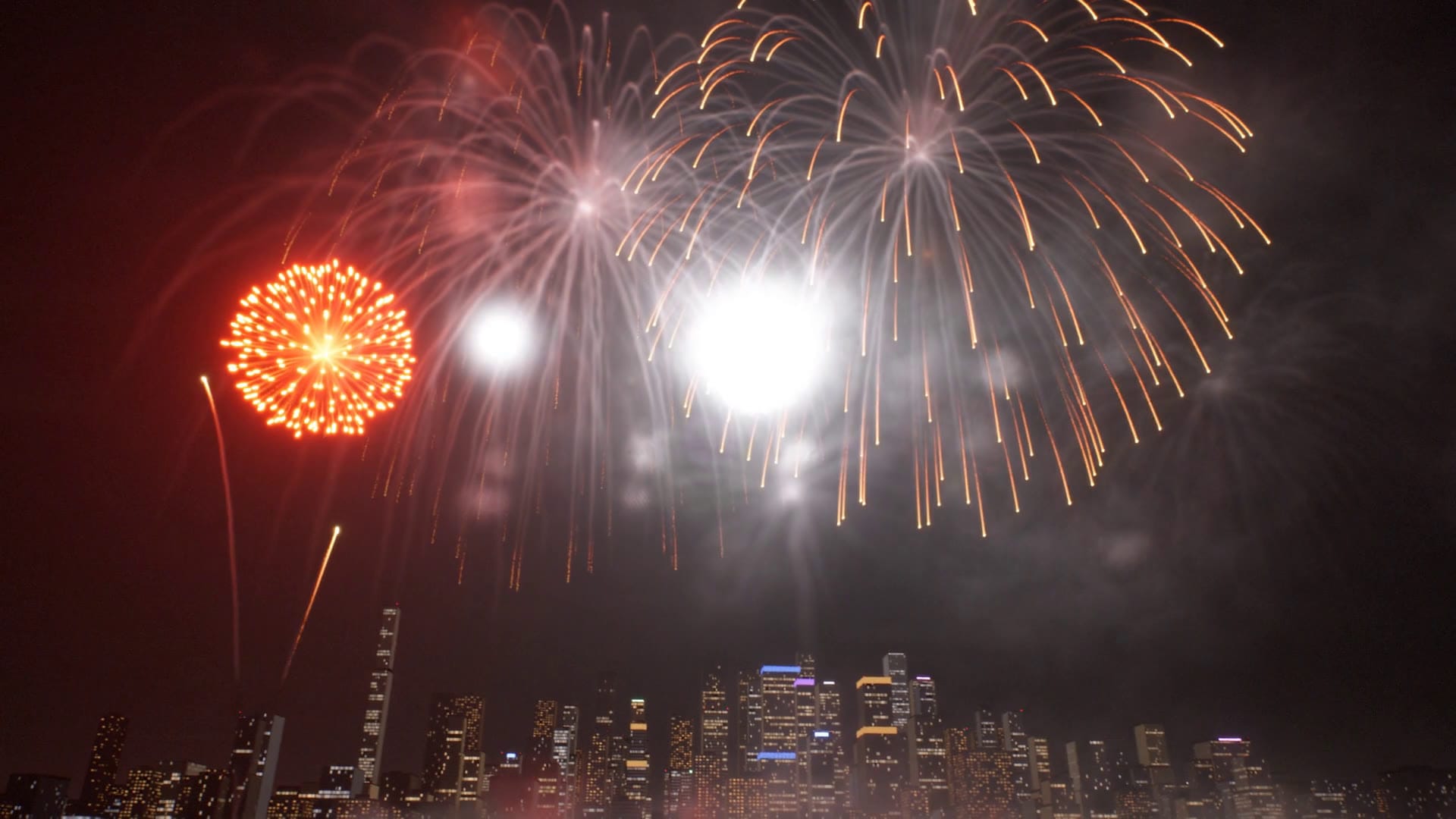
What you hear
Blast wave from the charge
Each report starts as a blast wave sized by the charge's TNT equivalence: a salute is a sharp crack, a large break a deep thump.
Speed of sound
Sound travels at about 343 m/s at 20 °C, so every report is delayed by its distance to the listener, burst by burst.
Air absorption
High frequencies fade faster with distance than low ones, which is why distant shells sound like soft booms.
Reflections and echoes
The water, the waterfront and the skyline throw reports back, giving the long rolling tail of a harbor show.
Lift directivity
A mortar is loudest along its bore. From the audience, 90° to the side, a launch is a muffled thud under the burst.
Mixed with the music
The rendered video carries the score and the physical firework sound together, as an audience would hear them.
Physical sound: common questions
Are the sounds recorded or synthesised?
Both. The blast wave is synthesised from each shell's charge, then combined with free-licensed recordings and generated effects for crackle, whistles and hiss, and everything goes through the same propagation chain.
Can I make the reports less delayed?
Yes. The show's Firework sound setting brings reports closer to the flash and softens the echoes. 100% is the true distance for the audience.
How loud are real fireworks?
Microphones about 90 m below 4- to 6-inch display bursts have measured peaks up to about 150 dB. A 3-inch peony breaks around 134 dB at 100 m in the simulator, a 5-inch salute around 146 dB.
Design your first show tonight.
The designer runs in your browser with three demo shows and the full shell library. No account, no install: your shows and music stay on your computer.